In short
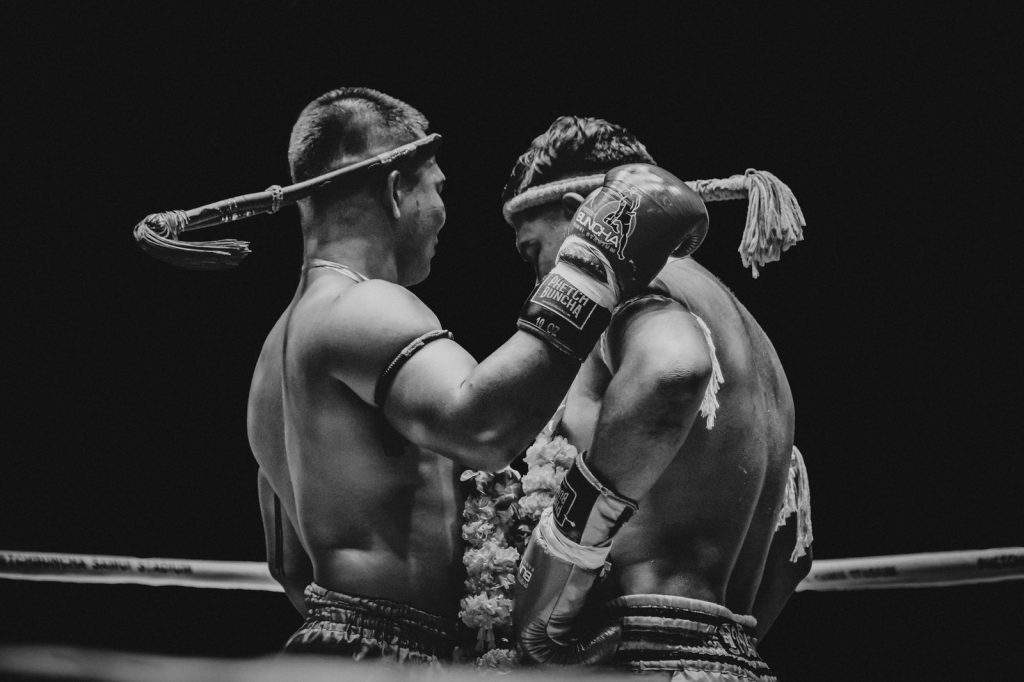
- The Thai clinch means controlling the back of the opponent’s head with both hands.
- It opens knees to the body and head, legal against a standing opponent.
- Elbows squeezed against the opponent’s chest stop them from lifting their head.
- In MMA you have to combine it with takedown defense.
- Anderson Silva made it famous against Rich Franklin in 2006.
In the clinch, not everyone wants to wrestle. The Thai clinch, or plum clinch, is Muay Thai’s answer: instead of attacking the legs, you take the head.
The grip
Both hands go on the back of the opponent’s head, one over the other, fingers not interlaced, pulling down from the crown rather than the base of the neck. Your forearms and elbows squeeze against his chest and collarbones: the hands pull, the elbows block. Hips stay slightly back to leave room for knees, feet wide for balance.
From the clinch
- Knees to the body first, pulling the head down on impact, then to the face when the opponent bends to protect himself. Knees to the head are legal against a standing opponent and illegal once he is grounded under the Unified Rules. Anderson Silva’s clinch knees against Rich Franklin at UFC 64 in October 2006 won him the middleweight title and taught a generation the position.
- Off-balancing: pull the head to one side and turn to break the opponent’s posture.
- The exit: a horizontal elbow as you release, then a step back.
Limits in MMA
In Muay Thai the clinch ends with a referee break or a sweep. In MMA the opponent can drop for your legs, and with both hands on his head, you have none left to stop a shot. Keep your hips mobile and be ready to let go and sprawl. Against the cage, the opponent has support but nowhere to retreat, which makes the knees even more effective.
Escaping the Thai clinch
- Swim one arm inside and bring your hand to his neck to fight for control.
- Put your head against his chest to kill the space for knees.
- Switch to wrestling: underhooks, then a takedown or a cage clinch.
- Push on his hips and step back at an angle.
Frequently asked questions
What is the plum clinch?
Another name for the Thai clinch: a two-handed grip on the back of the head, elbows tight against the opponent’s chest, used to control posture and land knees.
Are knees legal in MMA?
Yes, to the body and head of a standing opponent. Knees to the head of a grounded opponent are illegal under the Unified Rules.
How do you escape a Thai clinch?
Swim an arm inside to regain neck control, put your head on the opponent’s chest, or switch to wrestling with underhooks.