
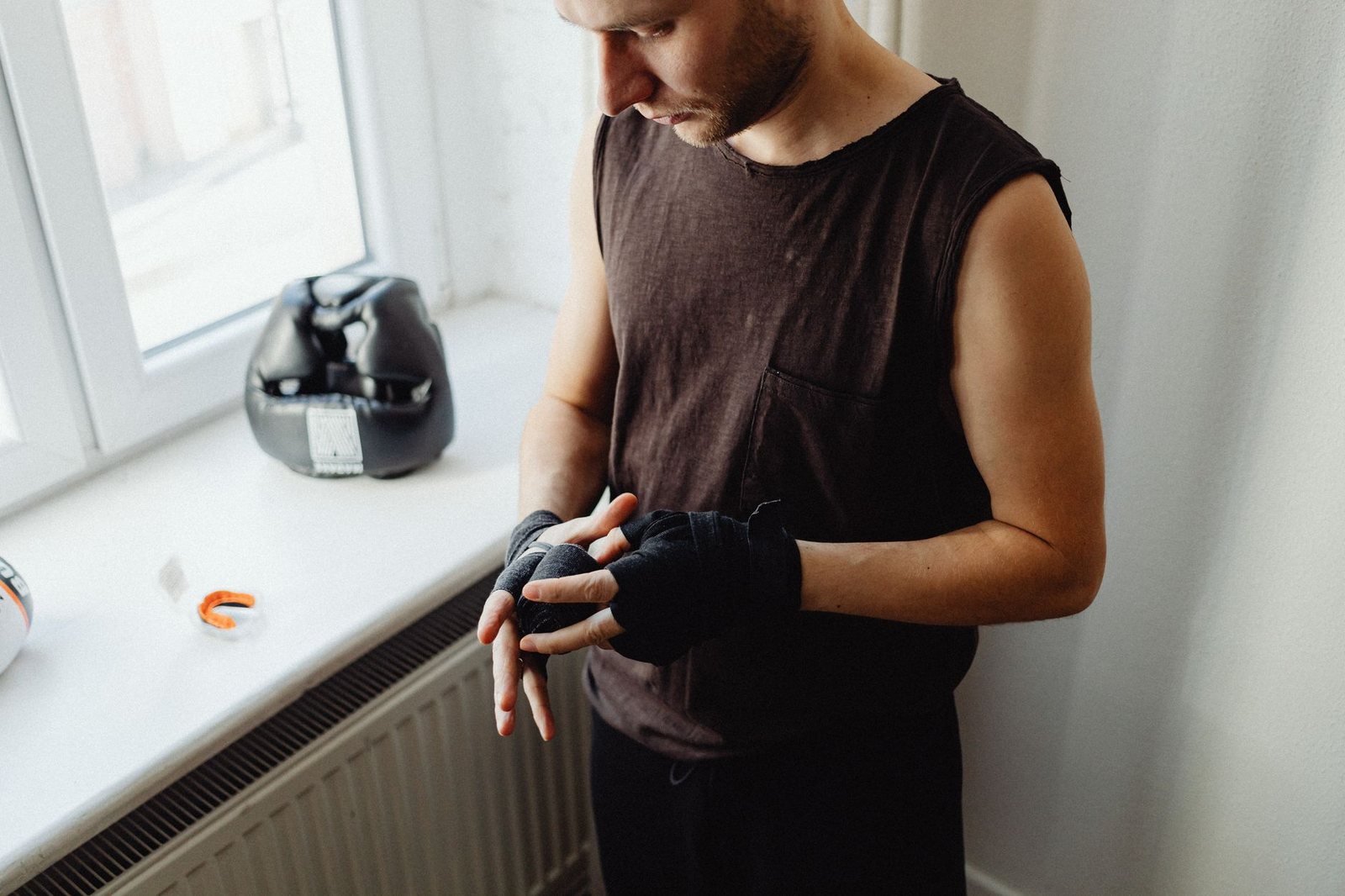
A mouthguard is one of the cheapest pieces of protection in your gym bag and one of the most overlooked. You can spend €300 on Hayabusa gloves and save €4 on mouth protection, but the day you eat a well-placed hook without a mouthguard, you end up at the dentist with a four-figure estimate and miss three months of training. It is the piece of equipment with the best cost-to-benefit ratio of all MMA gear, period.
Beyond your teeth, a good mouthguard absorbs part of the impact energy on the jaw and reduces the risk of getting knocked out by shots to the chin. This is backed by the medical literature, not a marketing claim. The market is wide, from €4 models at big-box stores to €150 custom-fitted guards. This selection covers the five buyer profiles that matter for an intermediate practitioner who wants neither to overspend nor to compromise on protection.
The Criteria That Matter
Single-material vs. dual-material
This is the key criterion. A single-material guard (one layer of moldable plastic) protects against direct impacts but absorbs little energy. A dual-material guard combines a rigid outer shell with a soft inner layer: better shock absorption, better comfort, better fit. For anything that looks like sparring, get a dual-material guard.
Molding
Nearly all the models here are boil-and-bite. Molding quality depends on the material used: a good mouthguard takes the impression of your teeth and keeps its shape over time, while a bad one deforms or does not mold properly around the molars. You can usually repeat the process two or three times if the first fitting is not clean.
Breathing comfort
During a round at 95% intensity, you are breathing at full capacity. A mouthguard that blocks airflow at the palate or forces you to clench constantly will cost you cardio. Look for models with built-in breathing channels and a low profile on the palate.
Fit
A mouthguard that moves around in your mouth is a mouthguard you will end up spitting out mid-round. Make sure the model molds well around the molars and stays stable when you talk or clench your teeth.
Design
A secondary but real criterion. A practitioner who likes their gear wears it every time. Some brands offer only one or two colorways, others around ten: it is up to you whether that matters.
Our 5 Mouthguard Picks for 2026
Best Overall
Shock Doctor Gel Max
- Indicative price
- €18-22
- Best for
- all practitioners, regular sparring, amateur competition
Shock Doctor is the leading American brand for high-performance sports protection, present in almost every contact sport (football, hockey, MMA, boxing). The Gel Max packs their know-how into a model under €20: a rigid elastomer outer shell, a gel inner layer that adapts to your teeth, and built-in breathing channels. You get the protection level of a model that costs twice as much from other brands.
Comfort in use is the real differentiator: it is one of the few models under €20 that you genuinely forget once it is in your mouth. For regular sparring where you go round after round, that changes everything. It is our default recommendation for 80% of practitioners.
Things to Watch:
- Limited color options (mainly black/orange)
- Bulkier than entry-level models, with a short but real adjustment period
Pros
- Premium protection at a mid-range price
- Excellent breathing comfort and fit
- Well-known brand, consistent build quality
Best Value
Decathlon Domyos Dual-Material
- Indicative price
- €8-12
- Best for
- beginners and intermediates, a first sparring mouthguard
For under €10, the Domyos Dual-Material is a real sparring mouthguard. The dual-material construction makes all the difference compared to the same maker’s single-material model: better shock absorption, better comfort, easier breathing during intense rounds. You do not get the finish of a Shock Doctor, but at this price there is no excuse to go without one if you are starting to spar.
The usual Decathlon advantage: you can find it in a physical store and return it easily if there is a problem. It is the most rational entry ticket for your first serious piece of gear.
Things to Watch:
- No color options (black only)
- Shorter lifespan than premium models with intensive use
Pros
- Dual-material for under €10: unbeatable value
- Available in Decathlon stores, easy returns
- Clean, repeatable molding
Best for Regular Sparring at the Gym
Venum Challenger
- Indicative price
- €13-17
- Best for
- regular practitioners, amateur competition, weekly sparring
The Challenger is the Venum mouthguard you see most often in the locker rooms of French MMA gyms. Solid dual-material construction, a wide range of colors (turquoise, red, black, white, neon, etc.), and Venum’s recognizable finish. It is the mid-range standard: not the most protective, not the most expensive, but the compromise that works for all the usual uses.
If you want your mouthguard to match your Venum gloves and shorts, it is the logical option. In terms of protection, it sits between the Domyos Dual-Material and the Shock Doctor: enough for regular gym sparring, a bit light for high-level competition.
Things to Watch:
- Protection a notch below the Shock Doctor for €3-5 less
- Breathing comfort is decent but not exceptional
Pros
- Wide choice of colors
- Consistent Venum quality, clean finish
- Widely available (retailers, online MMA stores)
The Rising Contender
Safejawz Viper
- Indicative price
- €17-22
- Best for
- practitioners who want a bold design, junior and adult
Safejawz is a British brand that makes nothing but mouthguards: it is their core business, not a spin-off from an MMA line. Less well known in France than Venum or Shock Doctor, it is gaining ground thanks to its variety of designs (vampire, teeth, flag and neon patterns) and its dual-material build quality. Available in Junior and Adult sizes, which is useful for gyms with youth programs.
The Viper is priced in the same segment as the Shock Doctor, with a much stronger design angle. If you want to stand out visually without sacrificing protection, it is the most interesting choice in this selection.
Things to Watch:
- Less widely distributed in France (Dragon Bleu and a few specialty retailers)
- Protection comparable to the Shock Doctor without surpassing it: a choice based on design preference
Pros
- The widest choice of designs in the selection
- Junior size available (handy for gyms)
- Specialist brand, solid dual-material quality
The Budget Starter Option
Decathlon Domyos Single-Material
- Indicative price
- €3-5
- Best for
- first classes, non-contact training, emergency backup
At this price, nobody expects a technical miracle. The Domyos Single-Material is a basic, clear boil-and-bite mouthguard with no design. It does the job for someone who is just starting out, who trains on the bag and Thai pads without real contact, or who left their mouthguard at home and needs an immediate backup from the nearest Decathlon.
Be clear about what it is for: as soon as you start contact sparring, this model shows its limits. Single-material means basic impact absorption. Switch to a dual-material guard as soon as your first rounds are coming up.
Things to Watch:
- Single-material: not suitable for real contact sparring
- Short lifespan, needs replacing quickly with regular use
Pros
- The cheapest option at mass-market retailers
- Available right away in stores
- Functional for non-contact technical training
Our Verdict
For 80% of practitioners, the Shock Doctor Gel Max is the right choice: for under €20, you get the protection, comfort and durability you expect from a good sparring mouthguard. You will not need to replace it for 12-18 months and you will not have to think about it in the meantime. It is the “you can’t go wrong” buy in this selection.
If you are just starting and want to limit your spending, the Decathlon Domyos Dual-Material for under €10 does the job to get into sparring. The Venum Challenger remains the logical compromise if you want your mouthguard to match your existing Venum gear. For practitioners who care about the look of their gear, the Safejawz Viper offers the widest range of designs without compromising on protection. And the Decathlon Domyos Single-Material is strictly for non-contact training or as a backup: it is not a serious sparring mouthguard.
One last point that outweighs every recommendation: a mouthguard only works if you wear it. The best model in the world sitting at the bottom of your bag protects nothing. Get in the habit of putting it in from the sparring warm-up, not after the first shot you take.
Stéphane “Smash” Coignon, professional middleweight fighter
FAQ
Do You Really Need a Mouthguard to Train MMA?
For purely technical sessions (shadowboxing, heavy bag, focus mitts), a mouthguard is not essential. As soon as there is sparring, even light, it becomes non-negotiable. Most serious gyms require it as minimum equipment, just like gloves and shin guards. At €4 for the entry-level model, the cost argument does not hold up for a second: a single dentist appointment costs more than ten years of mouthguards.
How Do You Fit a Boil-and-Bite Mouthguard?
Dip the mouthguard in hot water (about 80°C (176°F), not boiling) for 30 to 45 seconds. Wait 2-3 seconds for it to cool slightly, place it in your mouth and bite down firmly for 30 to 60 seconds, pressing the sides with your fingers to push the material tight against your molars. Let it cool in the open air or in cold water. If the fit is not clean, you can usually redo it once or twice without damaging the material.
How Often Should You Replace Your Mouthguard?
Immediately, as soon as you see signs of wear: deformation, cracks, material coming off, or a bad smell that persists despite rinsing. With regular sparring (2-3 times a week), replacing it every 6 to 12 months is reasonable for entry-level and mid-range models. Premium models usually last 12 to 18 months if you rinse them after each use and store them in a ventilated case.