
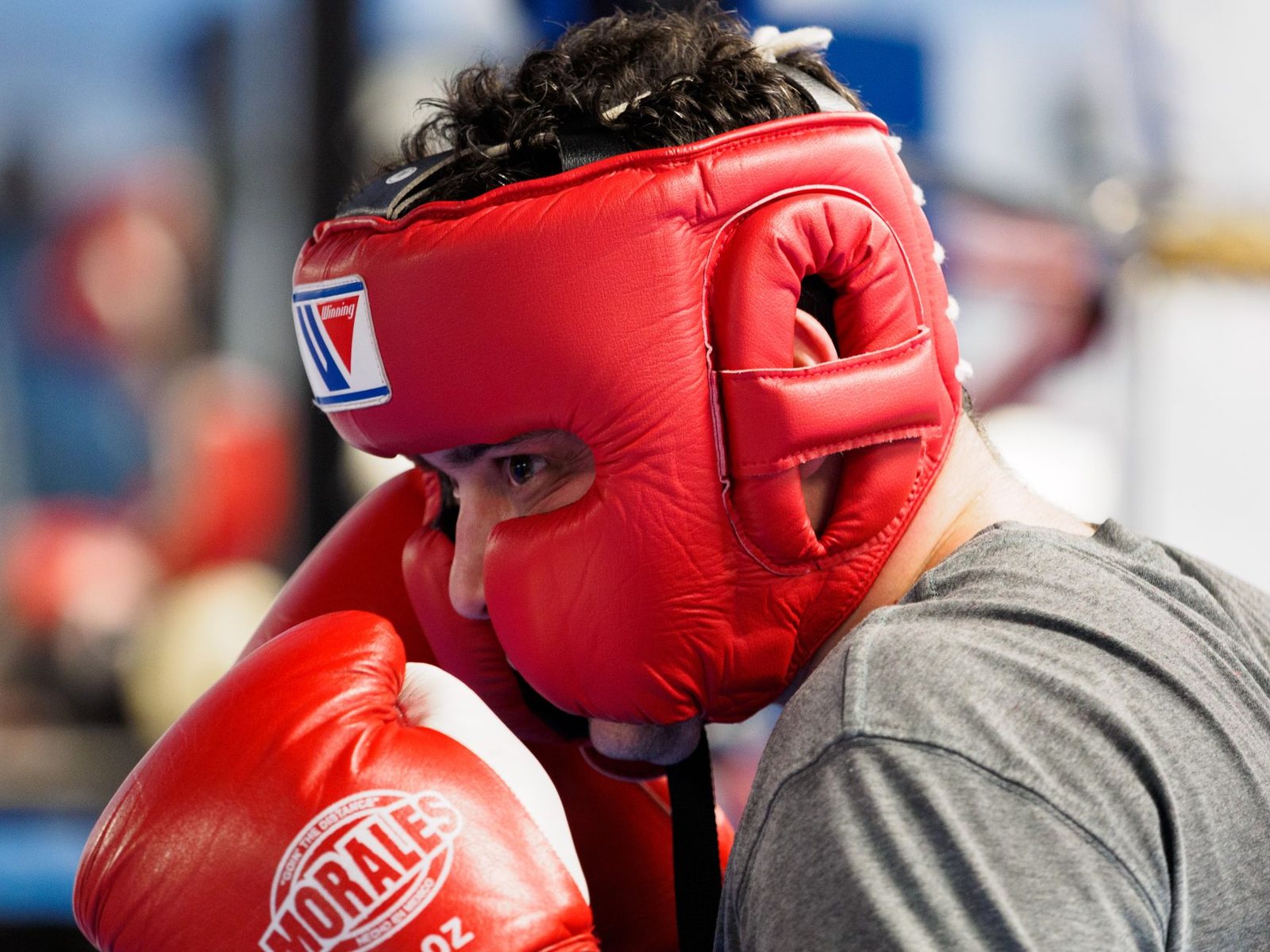
Why Your MMA Headgear Is Not the Same as Your Boxing Headgear
MMA headgear has to meet very different demands than classic boxing headgear. In MMA, you get taken down, you work in the clinch, you absorb elbows in training and you need to see your opponent level change for takedowns. Traditional boxing headgear (designed for straight punches on the feet) offers neither the stability nor the field of vision you need once the fight moves into grappling.
The criteria to evaluate for MMA headgear are therefore specific: temple and cheek protection (impact zones in the clinch), chin protection (rising strikes), nose protection (punches and elbows), stability on the ground (the headgear must not rotate on your skull), a wide field of vision (essential to anticipate a wrestler’s leg attacks), and compatibility with a mouthguard.
Comparison Table: MMA Headgear 2025
| Model | Price | Material | Protection | Field of Vision | Use | Rating | Link |
|---|---|---|---|---|---|---|---|
| Hayabusa T3 Headgear | To be confirmed | Premium synthetic leather | Excellent (temples, cheeks, chin) | Very wide | Full MMA sparring | 9.5/10 | Check price |
| Venum Elite Headgear | To be confirmed | Skintex (synthetic leather) | Very good (multi-layer) | Wide | MMA / Muay Thai | 8.8/10 | Check price |
| RDX F6 KARA Headgear | To be confirmed | Convex Skin leather (Maya Hide) | Very good (EVA-LUTION + Polygonal Fusion MOULD, CE certified) | Good (open design) | Beginner to intermediate sparring | 8.0/10 | Check price |
| Title Boxing Classic Headgear | To be confirmed | Synthetic leather | Fair (temples, cheeks) | Good (open on the sides) | Mainly boxing | 7.0/10 | Check price |
Detailed Reviews: Breaking Down Each Headgear
Hayabusa T3 Headgear: The Benchmark for MMA Sparring
The Hayabusa T3 is designed with an asymmetric architecture that optimizes protection according to the actual impact zones in MMA. The temples get thicker foam (elbows in the clinch), while the chin area includes reinforced protection without restricting jaw movement. The Dual-X foam absorbs repeated impacts without permanently compressing over time: a considerable advantage for athletes who spar several times a week.
Temple/cheek/chin/nose protection: Temple coverage is the best in this comparison: the side padding extends up to the brow line. Cheek protection is built in but leaves enough room for peripheral vision. The chin is protected by a padded chin strap that does not rotate during takedowns. The nose is exposed (open-face headgear), which is intentional: advanced MMA athletes favor vision over full nose protection.
Stability in the clinch: This is the T3’s strong point. The dual-strap rear closure system keeps the headgear centered even during clinch exchanges, sweeps and ground sequences. No rotation, no slipping over the eyes: a recurring flaw with entry-level headgear.
MMA vs boxing compatibility: Explicitly designed for MMA. The open cut around the ears lets you work head control and rear-naked chokes cleanly. The overall shape of the headgear does not interfere with the low guard stance typical of MMA fighters. In pure boxing, it works perfectly, but the lack of full nose protection may put off some beginner boxers.
Watch out for: The price is high: check with retailers. Choose the size carefully (measure your head circumference before ordering).
See the Hayabusa T3 Headgear →
Venum Elite Headgear: The Best Value for Money
The Venum Elite is the mid-range benchmark for MMA athletes who want serious protection without breaking the bank. The Skintex construction (Venum’s in-house synthetic leather) is solid and holds up well to sweat and friction on the mat. The triple-density foam properly absorbs the repeated impacts of MMA sparring.
Temple/cheek/chin/nose protection: The temples are well covered with generous padding. The cheeks are protected by side panels that maintain a good field of vision. The chin is protected, but the chin strap is slightly less robust than on the T3: enough for light to moderate sparring. The nose is open (same philosophy as the Hayabusa).
Stability in the clinch: The rear hook-and-loop closure holds well in most situations. You may notice slight rotation during intense exchanges on the ground: not a deal breaker, but inferior to the Hayabusa T3 on this specific point.
MMA vs boxing compatibility: Versatile. Suitable for MMA, Muay Thai and boxing. The cut is open enough for head control in grappling. A good choice if you train several disciplines at the same gym.
See the Venum Elite Headgear →
RDX F6 KARA Headgear: CE-Certified Protection for All-Around Sparring
The RDX F6 KARA is the high-end headgear in RDX’s F-Series line. It uses the same EVA-LUTION Polygonal Fusion MOULD padding as the F6 KARA gloves: a foam structured in polygonal cells that spreads the impact over a larger surface, reducing the force transmitted to the temples and cheeks. The CE certification issued by SATRA Technology confirms that the protection exceeds the minimum thresholds for serious sparring headgear. The Convex Skin leather (upgraded Maya Hide) is the most durable outer material in the RDX range.
Temple/cheek/chin/nose protection: Full face protection with generous temple coverage and a well-padded chin strap. Open-face headgear like the Venum Elite and the Hayabusa T3: the nose is open, which maximizes field of vision and breathing. The Polygonal Fusion MOULD absorbs impacts on the cheeks and temples significantly better than standard entry-level EVA.
Stability in the clinch: The Quick-EZ hook-and-loop closure adjusts precisely and keeps the headgear centered during clinch exchanges. Less rotation than headgear without a dual rear strap. For MMA sparring with ground phases, this level of stability is solid for a beginner to intermediate product.
MMA vs boxing compatibility: Versatile. Designed for MMA sparring on the feet and on the ground. The open-face cut and ear clearance allow head control and ground transitions without the headgear getting in the way. Available in 6 colors (Black, Gold, Red, Pink, Silver, White) and 4 sizes (S to XL). Price in EUR to be confirmed on rdxsports.fr.
See the RDX F6 KARA Headgear →
Title Boxing Classic Headgear: A Boxing Classic, Not an MMA One
The Title Boxing Classic is traditional boxing headgear that has been respected in American boxing gyms for decades. Its leather construction (or synthetic leather depending on the version) is sturdy and its side padding solid. But its strengths are designed for boxing, not MMA.
Temple/cheek/chin/nose protection: Temple protection is good, cheek protection fair. The chin is protected. The nose is open. The main shortcoming: the high cut over the ears and the lack of coverage on the occipital areas make this headgear less suited to elbows and grappling holds.
Stability in the clinch: The weak point. The classic lace-up system (on leather versions) or the rear hook-and-loop closure (synthetic versions) does not hold the headgear as well during intense clinch exchanges. Rotation is common during body-to-body and ground sequences.
MMA vs boxing compatibility: Clearly geared toward boxing. If your main discipline is boxing and you want iconic headgear for sparring on the feet, it is an excellent buy. However, if you do full MMA sparring with grappling, takedowns and clinch work, the other three headgear models in this comparison will protect you better.
See the Title Boxing Classic Headgear →
How to Choose Your MMA Headgear: The 5 Deciding Criteria
1. The Intensity Level of Your Sparring
Light technical sparring (flow sparring) does not require the same level of protection as full sparring at 80% intensity. For light sparring, the Venum Elite is more than enough. For regular hard sessions, invest in the Hayabusa T3: your temples will thank you in the long run. The rule is simple: the harder you spar, the higher the protection needs to be.
2. The Grappling/Striking Ratio in Your Sparring
If your sparring is mostly on the feet (striking), headgear with good facial protection like the RDX F6 KARA works. If you regularly go to the ground with ground-and-pound, heavy clinch work and takedowns, go for the Hayabusa T3 or the Venum Elite, whose stability is optimized for these situations.
3. Size and Fit
Always measure your head circumference before buying. Headgear that is too big rotates over your eyes during exchanges: a safety and comfort problem. Headgear that is too tight causes headaches and pressure on the temples. Most manufacturers provide precise size charts: measure at forehead height, just above the eyebrows.
4. Mouthguard Compatibility
All the headgear in this comparison is compatible with a standard mouthguard. For bulky custom mouthguards (dental molds), check that the chin strap leaves enough room to open your mouth comfortably. The Hayabusa T3 and the Venum Elite are the most generous on this point.
5. Care and Durability
Sparring headgear absorbs a lot of sweat. After each session, wipe the inside with a damp cloth and let it air dry: never in a closed bag. Some models like the RDX F6 KARA have an antimicrobial lining that slows the development of bad odors. Made of synthetic leather, all these models withstand regular cleaning without degrading quickly.
Verdicts: Which Headgear for Which Profile?
- Full MMA sparring: Hayabusa T3 Headgear: Its stability, temple protection and field of vision make it the best tool for MMA sparring in every phase.
- Best value for money: Venum Elite Headgear: Serious protection, durable construction, versatile for MMA/Muay Thai, at a price well below the Hayabusa.
- Beginner to intermediate versatility: RDX F6 KARA Headgear: CE certification, EVA-LUTION + Polygonal Fusion MOULD and 6 available colors: the best protection-to-price ratio in this comparison.
- Boxer starting MMA or stand-up sparring only: Title Boxing Classic Headgear: Sturdy construction, proven comfort for stand-up work. Best kept for sessions without grappling or intense clinch work.
FAQ: Frequently Asked Questions About MMA Headgear
Does MMA headgear really protect against concussions?
No, no headgear prevents concussions: that is a dangerous myth. Headgear reduces cuts, superficial bruising and the impact of glancing blows, but concussions are caused by the brain rotating inside the skull during a violent impact. The only real protection against concussions is controlling sparring intensity and stopping immediately if symptoms appear. Wear headgear to protect your skin and bones, not your brain.
Can you use boxing headgear for MMA sparring?
Yes, but with limitations. Classic boxing headgear (like the Title Boxing Classic) works for stand-up sparring but is not optimized for the clinch, takedowns and the ground. It may rotate during body-to-body exchanges and does not cover the impact zones specific to MMA (occipital area, behind the ears). For full MMA sparring, headgear specifically designed for MMA like the Hayabusa T3 or the Venum Elite is clearly preferable.
How do you properly fit MMA headgear?
The headgear should hold firmly without squeezing painfully. Slide two fingers under the forehead band: they should just fit. The temples should be covered up to the brow line. The chin should be protected without the chin strap touching your neck. Once the headgear is on, shake your head vigorously: it should not rotate over your eyes. Adjust the rear straps gradually and symmetrically.
How often should you replace your MMA headgear?
As a general rule, headgear used for 2 to 3 sparring sessions per week should be replaced every 2 to 3 years. Signs it needs replacing: foam that no longer returns to its shape after compression, leather that cracks or peels, a closure system that no longer holds. Permanently compressed foam no longer absorbs impacts: headgear in this condition is more dangerous than useful.
What is the difference between open-face and full-face headgear?
Open-face headgear leaves the nose and mouth exposed: it is the standard in MMA sparring because it maximizes field of vision and breathing. Full-face or semi-face headgear includes a nose bar or a full mask that offers more nose protection. The RDX F1 is an example of semi-face headgear with a removable nose bar. Full-face headgear is rare in MMA because it reduces vision and distance perception too much: it is mostly used when starting out or while recovering from a broken nose.